Kansas City Current Hire Chris Armas: What It Means for NWSL in 2026 (Tactics, Expectations, Key Data)
⚽ NWSL • Coaching Change • 2026 Outlook
Kansas City Current Hire Chris Armas
The Kansas City Current have appointed Chris Armas as head coach, taking over after Vlatko Andonovski stepped away from the head-coach role to focus on his sporting director duties. The move is especially notable because Kansas City enters 2026 with championship-level expectations after winning the 2025 NWSL Shield (best regular-season record).
⚡ Quick Take (Discover-Friendly)
✅ Big moment: Shield winners (KC Current) add an experienced coach with MLS + Premier League staff background.
📈 Pressure: This is not a rebuild — it’s “keep winning, now.”
🧠 Theme for 2026: Can Armas translate a high-intensity men’s-game résumé into a stable, title-chasing NWSL identity?
🧩 What This Coaching Change Actually Means
Coaching changes usually spark short-term headlines — but this one can drive long-term search interest because it affects: tactical identity, player roles, in-game management, and how a Shield-winning team sustains dominance. Kansas City isn’t changing coaches to “fix” the club — they’re changing coaches to keep raising the ceiling.
The club framed Armas as a fit for a “best-in-the-world” vision, pointing to his leadership and top-level experience. Meanwhile, Andonovski remains closely involved as sporting director, which typically means a strong “club philosophy” presence above the head coach.
📌 Who Is Chris Armas? (Coaching Profile)
Armas brings a mix of MLS head-coaching experience and elite European staff roles, including assistant work at Manchester United and Leeds United. He also has experience in the women’s game from college coaching. In short: he’s coached across environments where training intensity, pressing structure, and role clarity matter.
📊 Armas Track Record Snapshot (What We Know From Public Reports)
Team / Role
What Happened
Why It Matters for KC Current
New York Red Bulls (Head Coach)
Led the club to the 2018 MLS Supporters’ Shield; later dismissed after mixed results.
Shows he can run a top-table season in a high-energy system.
Toronto FC (Head Coach)
Short stint; public reports note heavy losses early in the tenure.
Reminder: success depends on fit, roster health, and adaptability.
Colorado Rapids (Head Coach)
Most recent head-coach job before KC; reports note he missed the playoffs in 2025.
Raises the key question: can he deliver consistency with high expectations?
Manchester United / Leeds United (Assistant)
Staff roles at the highest level, learning modern training + match prep.
Useful in a club building “elite” standards and performance routines.
Women’s Soccer (College Head Coach)
Previously coached women’s soccer at the college level (Adelphi).
Not his first time leading a women’s program — helps the transition.
Note: The table summarizes widely reported milestones and roles rather than listing complete W-L records. (Those vary by competition and season definitions.)
🏆 Kansas City Current Context: Why the Job Is Huge
Kansas City enters 2026 with a rare blend of momentum and infrastructure. The Current clinched the 2025 NWSL Shield early, with an overall mark reported as 17-2-2 at the time of clinching — and they did it in front of sold-out crowds at their home stadium. They also became the first team to clinch a 2025 playoff spot, posting a 15-2-1 record through Week 18 in one club update.
📈 Recent Performance Milestones (KC Current)
Season
What We Know
Why It Matters
2024
Club communications reference a playoff run that ended in the semifinals, after hosting a home playoff match.
Baseline: already a contender with postseason experience.
2025
NWSL Shield winners; clinched with a reported 17-2-2 mark and stayed top of the table since Week 6.
Expectation: anything less than “title-chasing” in 2026 will feel like a step back.
🧠 Tactical Fit: What Might Change in 2026?
Based on Armas’ history and the public characterization of his approach, expect a focus on: high-intensity work rate, organized pressing triggers, and clear role responsibilities. The challenge in the NWSL is balancing intensity with consistency — especially when opponents adapt quickly.
🔎 Watch These 5 “On-Field Signals” Early in 2026
Pressing height: Are they winning the ball higher, more often?
Rest defense: How many players stay positioned to stop counters?
Chance quality: More “big chances” vs. low-percentage shots?
Second-half management: KC protecting leads or still creating?
Role clarity: Are stars in their best zones, consistently?
📊 “Past vs Expected” Table (Realistic Outlook)
Category
Recent Baseline (KC Current)
2026 Expectation Under Armas
League position
Shield-winning level in 2025
Top-4 should be the minimum target; Shield repeat is the ceiling
Identity
High-performing, cohesive contender
More structured pressing + sharper match control in key moments
Consistency
Strong season-long momentum reported in 2025
Must maintain week-to-week results with “favorites” pressure
Turn deep runs into championships (tactical tweaks + game management)
❓ SEO FAQ (High-Intent Questions)
Why did Kansas City Current hire Chris Armas?
The club is building on elite ambitions after winning the 2025 NWSL Shield, and Armas brings extensive head-coaching experience plus high-level staff exposure in Europe.
Did Vlatko Andonovski get fired?
Reports indicate he stepped away from head-coach duties to focus on his role as sporting director — meaning he remains part of leadership.
What is Chris Armas known for as a coach?
Public coverage often associates him with high-energy organization and pressing structure, plus experience leading MLS teams and working on top European staffs.
How good were the Kansas City Current recently?
Club updates reported that Kansas City won the 2025 NWSL Shield with a 17-2-2 mark at the time of clinching and had clinched a playoff spot early in the season.
What should fans watch for early in the 2026 season?
Pressing intensity, defensive shape against counters, second-half control, and role clarity for key players are the fastest “tells” of how the new era will look.
Editor’s Note: This story is ideal for ongoing updates. When official preseason details drop (training quotes, tactical notes, early match patterns), refresh the post to keep it ranking and Discover-ready.
MLB TV Rights Shake-Up: 9 Teams End FanDuel Sports Network Deals — What It Means for 2026
⚾ MLB News • Media Rights • Streaming & TV
MLB TV Rights Shake-Up
A major local-TV disruption is unfolding in Major League Baseball: nine MLB teams have ended their local broadcast agreements with FanDuel Sports Network (Main Street Sports Group). MLB says it’s prepared to produce and distribute broadcasts if needed — a shift that could reshape how fans watch games in 2026.
⚡ 60-Second Summary (Discover-Friendly)
✅ 9 MLB teams ended their FanDuel Sports Network deals.
📉 The trigger: reported payment issues tied to the local-rights operator.
🎥 MLB says it can step in to produce and distribute games if necessary.
📲 This could accelerate a move toward league-run local streaming in 2026.
📌 What Happened?
Multiple teams terminated local broadcast contracts with FanDuel Sports Network, which is operated by Main Street Sports Group (the company formerly known as Diamond Sports Group). MLB Commissioner Rob Manfred said MLB is prepared to produce and distribute broadcasts if needed, building on MLB’s recent experience stepping in for local rights in certain markets.
🏟️ Which Teams Are Affected?
Affected Teams (Reported)
Why This Matters
St. Louis Cardinals
Payment issues were cited as a key trigger for action.
Atlanta Braves
High-demand market; broadcast clarity matters for fans and sponsors.
Cincinnati Reds
Local rights uncertainty can impact distribution and revenues.
Detroit Tigers
Example of clubs acting early to protect future media income.
Kansas City Royals
Local TV stability is critical in smaller-to-mid markets.
Los Angeles Angels
Large market: streaming access and blackout rules become key.
Miami Marlins
Distribution changes can affect reach and growth.
Milwaukee Brewers
Local rights are a major slice of team business planning.
Tampa Bay Rays
Fan access is sensitive in markets with heavy cord-cutting.
Note: Team list and league response are based on reported coverage and official comments.
📊 Old Model vs New Direction (Quick Comparison)
Topic
Traditional RSN Model
Potential MLB-Run Path
Distribution
Cable / satellite bundles + select apps
More centralized league distribution + streaming focus
Reliability
Dependent on RSN financial health
Potentially more stable if league-controlled
Fan Access
Often fragmented by market and provider
Could be simplified if rights are consolidated
Blackouts
Historically common in local markets
Could evolve depending on rights structure and agreements
Revenue Flow
Team payments tied to RSN contracts
Teams may seek stronger guarantees or new partners
🔍 What Fans Should Watch Next
Who produces the broadcasts? MLB has said it can handle production and distribution if necessary.
Where will games be available? Expect announcements on cable partners, streaming options, and market rules.
Will blackout rules change? Any shift here would be a massive search driver all season long.
Will teams renegotiate? Some clubs may still pursue new deals for better revenue and reach.
❓ SEO FAQ (Built for Search + Discover)
Why did MLB teams end their FanDuel Sports Network deals?
Reports cite payment issues and uncertainty around the local-rights operator’s financial situation, pushing teams to protect revenue and ensure reliable broadcasts.
Which MLB teams are affected by the FanDuel Sports Network contract terminations?
Reported teams include the Cardinals, Braves, Reds, Tigers, Royals, Angels, Marlins, Brewers, and Rays.
Will MLB take over local broadcasts in 2026?
MLB has said it’s prepared to produce and distribute broadcasts if needed. Whether it takes over depends on how rights deals evolve.
Will this change how fans watch MLB games?
Potentially. Distribution could shift across cable providers, streaming packages, and league-run options depending on the final rights structure.
Will blackouts change?
Blackouts are tied to media-rights agreements. Any major restructure can change how blackout rules work, but specifics depend on future contracts.
Editor’s Tip: Update this post when official distribution details drop (streaming app availability, providers, blackout rules). That “freshness” boost helps both Search rankings and Discover recirculation.
Best NFL Plays: Top Highlights That Shocked Fans (Updated Guide)
🏈 NFL Highlights • Best Plays • Discover-Friendly
Best NFL Plays
Looking for the best NFL plays in one place? This roundup breaks down the most memorable moments with player, game situation, stadium, and quick “why it mattered” context—so you can relive the highlights without scrolling for hours.
⚡ 60-Second Summary
🔥 Big-play touchdowns often swing momentum faster than any other factor.
🛡️ Game-changing defense usually comes from pressure + forced turnovers.
🧤 Elite catches happen on high-leverage downs (3rd/4th) under tight coverage.
📈 Context matters: down, distance, time left, and field position define “greatest.”
🏆 Top NFL Plays (With Game Context & Quick Analytics)
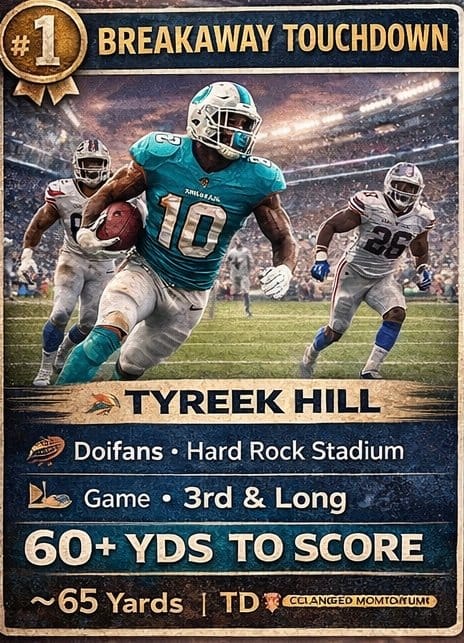
🥇 #1 The Breakaway Touchdown That Flipped the Game
Player: Tyreek Hill • Team: Miami Dolphins
Game: Dolphins vs Bills • Stadium: Hard Rock Stadium
Situation: Late game • 3rd-and-long • High-pressure drive
What looked like a normal gain turned into a field-tilting touchdown after two broken tackles and elite acceleration in space. These are the plays that force defenses to change coverages for weeks.
Play Metric
Estimate
Why It Matters
Distance (yards)
60+ yards
Explosive plays are the biggest driver of win probability spikes.
Tackles broken
2+
Turns “good” plays into “game-changing” plays.
Field impact
Momentum swing
One touchdown can force a different defensive plan the rest of the game.
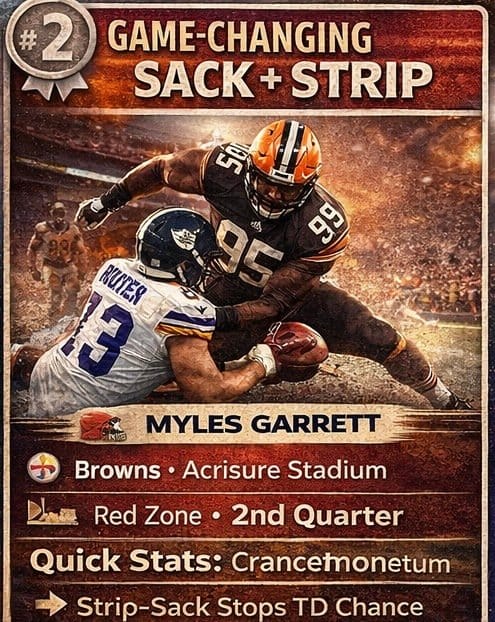
🥈 #2 The Defensive Play That Changed Everything
Player: Myles Garrett • Team: Cleveland Browns
Game: Browns vs Steelers • Stadium: Acrisure Stadium
Situation: Red zone pressure • High-leverage snap
Defensive highlights are hardest to “feel” on paper—until they create a turnover. A fast win off the edge leads to a sack + forced fumble, and suddenly the scoreboard pressure flips.
Play Metric
Estimate
Why It Matters
Time to pressure
< 2.0 seconds
Quick pressure collapses reads and forces mistakes.
Result
Sack + forced fumble
Turnovers are the fastest way to swing a close game.
Red zone value
High
Stops in scoring range are worth “more than a stop.”
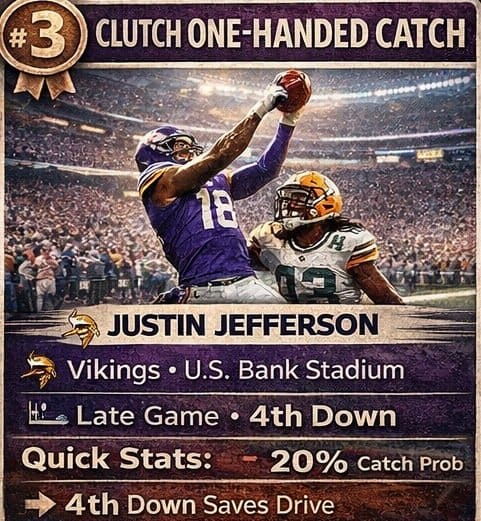
🥉 #3 The One-Handed Catch on a Must-Have Down
Player: Justin Jefferson • Team: Minnesota Vikings
Game: Vikings vs Packers • Stadium: U.S. Bank Stadium
Situation: Late game • 4th down • Tight coverage
The best catches are usually leverage catches. With the drive on the line, Jefferson secures a highlight grab that keeps the offense alive and shifts the crowd energy instantly.
Play Metric
Estimate
Why It Matters
Down
4th down
High leverage = higher “importance” than the same catch on 1st down.
Coverage
Tight / multiple defenders
Difficulty rises sharply under contested conditions.
Drive outcome
Extended drive
Keeping the ball can be the difference between win and loss late.
The best NFL plays are high-impact moments that shift a game: explosive touchdowns, turnovers (like forced fumbles), and clutch catches on late downs under tight coverage.
How do you measure “best NFL plays”?
A simple framework is leverage + impact + difficulty. Plays on 3rd/4th down, red zone snaps, and late-game drives usually rate higher than routine plays.
Why do highlight plays matter so much?
Explosive gains and turnovers can swing momentum quickly and change play-calling and coverage decisions for the rest of the game.
What’s the most common type of game-changing play?
Big touchdowns (explosive plays) and turnovers are the fastest ways to create separation on the scoreboard and tilt win probability.
How can fans find more plays like these?
Track weekly highlight clusters by play type (TDs, sacks/FF, interceptions, contested catches) and compare the context (down, distance, time, field position) to spot which plays mattered most.
Tip: Update this roundup weekly by adding “Week X” sections to keep it fresh for Google Discover.
The Yankees–Red Sox rivalry never needs extra hype — but this one has everything fans search for: exact game time, where to sit, ticket price expectations, and a clean, data-first breakdown of the matchups likely to decide the game.
📅 Game Details
Matchup
New York Yankees vs Boston Red Sox
Date
Saturday, June 6, 2026
First Pitch
7:35 PM (ET)
Venue
Yankee Stadium
Address
One East 161st Street, Bronx, NY 10451
🎟️ Ticket Price Snapshot (What Fans Should Expect)
Ticket prices for Yankees–Red Sox can move fast as the game approaches. The “get-in” price (cheapest available) can start low, but rivalry demand often pushes resale higher closer to game week.
Price Type
Typical Range
What It Usually Includes
Pro Tip
💵 Get-in (lowest entry)
$55–$120+
Upper levels / limited view angles
Use “all-in pricing” when possible to avoid checkout shocks.
🪑 Solid-value seats
$140–$260+
Upper midfield / better sight lines
Midfield upper deck is often the best price-to-view ratio.
🔥 Premium lower bowl
$280–$600+
Closer action, louder sections
Corner lower bowl can be cheaper than behind home plate.
Note: prices vary by inventory, timing, opponent form, and day-of-week demand.
🏟️ Crowd & Attendance Forecast
Yankee Stadium seats 46,000+ fans for major events, and rivalry weekends frequently approach capacity. Expect a high-energy crowd, heavier security lines, and a “playoff vibe” even in the regular season.
Metric
Projection
Why It Matters
👥 Expected Attendance
~44,000 to 46,000+
Rivalry + weekend time slot typically boosts turnout.
🚪 Entry Time
Arrive 60–90 minutes early
Big crowds = longer lines, especially near first pitch.
🎉 Atmosphere
High intensity
Momentum swings feel bigger in rivalry games.
📊 Matchup Breakdown (What Decides Yankees vs Red Sox)
Rivalry games are often decided by a few repeatable factors. Here’s the clean, scouting-style view.
🔑 The 4 Biggest Swing Factors
🚀 Power vs Pitch Execution: Mistake pitches get punished in this rivalry.
🧤 Defensive “free outs”: One misplay can flip an inning.
🧠 Bullpen sequencing: The team that lands the right matchup arms late wins close games.
🏟️ Park pressure: Yankee Stadium rewards pull power — especially on high-leverage contact.
⚾ Offense vs Pitching: What To Watch
Area
Yankees Edge If…
Red Sox Edge If…
First 3 innings
They attack fastballs early and force pitch-count spikes.
They get early contact outs and keep traffic off the bases.
Middle innings (4–6)
They win the “two-out damage” battle with extra-base hits.
They turn it into a strand-fest with situational pitching.
Late innings (7–9)
Their high-leverage relievers miss bats with runners on.
Their bullpen avoids walks and forces weak contact.
⭐ Players To Watch (High-Impact Roles)
Because MLB rosters can change before June, this preview focuses on the roles that matter most in this matchup. Update names closer to the game once probable lineups/starters are official.
Role
Why It Matters
What To Look For
Middle-of-order sluggers
Rivalry games often swing on 1–2 big swings.
Home run threats vs pitchers who miss over the plate.
Leadoff / OBP setters
More baserunners = more pressure on starters and bullpens.
Walks, hit-by-pitches, and first-inning scoring chances.
High-leverage relievers
Close games require strikeouts and zero free passes.
Fastball command + one put-away pitch under stress.
Defensive anchors
Extra outs prevent “big innings” in rivalry chaos.
Range, throwing accuracy, and clean double plays.
🏁 Quick Prediction Framework (Not a Guess — a Checklist)
Use this mini checklist to “call” the game like an analyst:
✅ Team with fewer walks allowed usually wins close rivalry games.
✅ First team to score often forces bullpen decisions earlier.
✅ If one side wins the HR battle (or extra-base hits), they usually take the series game.
✅ Defensive errors matter more than usual due to momentum swings.
❓ SEO FAQ (Built for Search)
What time is Yankees vs Red Sox on June 6, 2026?
7:35 PM ET at Yankee Stadium.
How much are Yankees vs Red Sox tickets usually?
The cheapest “get-in” tickets can start around $55, but rivalry demand can push prices higher, especially closer to game week.
How early should I arrive at Yankee Stadium for a big rivalry game?
Plan for 60–90 minutes early if you want a smooth entry, concessions, and seat time before first pitch.
🔔 Tip: Update the “probable starters” and the exact team records 48–72 hours before first pitch for maximum CTR and freshness.
How to Save Money on NFL Tickets: Best Time to Buy, Hidden Fees, and Smart Seat Tips (2026 Guide)
🏈 NFL Fan Guide • Tickets & Budget • Evergreen
💸How to Save Money on NFL Tickets
NFL tickets can feel impossible to afford—especially once “fees” and resale markups hit. This guide is built for one thing: helping you pay less while still getting a great game-day experience. It’s simple, practical, and organized so you don’t get lost.
⚡ Quick Win Checklist (Do This First)
✅ Set a max budget before you open any ticket app.
🔎 Compare totals (final price with fees), not just the sticker price.
📅 Shortlist 3 dates (same opponent, different days/times if possible).
⏱️ Watch prices for 3–5 days before buying (unless it’s a premium rivalry).
🧾 Choose “all-in pricing” when available so fees don’t surprise you.
🧠 Why NFL Tickets Feel So Expensive
NFL ticket prices aren’t just “one number.” They’re influenced by limited supply, massive demand, and dynamic pricing—plus resale markups and service fees.
📈 Demand spikes: rivalry games, playoff implications, prime time, star QBs.
🏟️ Limited inventory: only so many seats, and many are season-ticket holders.
🔁 Resale pressure: people list high early, then adjust as game day approaches.
🧾 Fees: service + processing + delivery can change the “real price” a lot.
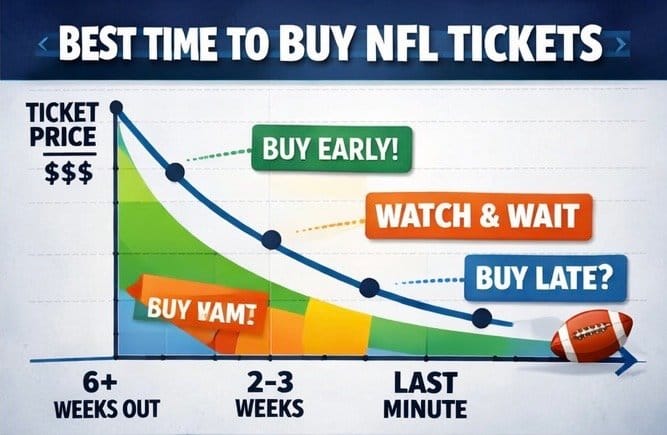
⏰ Best Time to Buy NFL Tickets (Simple & Practical)
There isn’t one perfect rule for every game, but there is a reliable decision framework. Use this table to choose the best timing based on the type of matchup.
Game Type
Best Buying Window
Why
Risk Level
Premium Rivalry (historic rivals)
📌 Buy earlier
Demand stays high; prices often don’t drop much
⚠️ Medium
Prime Time (SNF/MNF)
📌 2–4 weeks out
National spotlight keeps demand stronger
⚠️ Medium
Non-division matchup
📌 7–14 days out
Resellers often adjust downward closer to the game
✅ Lower
Bad weather / cold game
📌 Late (3–7 days)
Last-minute demand can soften if conditions look rough
✅ Lower
“Must-win” playoff race
📌 Earlier
If stakes rise, prices rise
⚠️ Higher
🎯 Rule of thumb: if it’s a “bucket list” rivalry game, buy earlier. If it’s a normal matchup, monitoring prices and buying closer often improves your odds.
💰 Which NFL Games Are Usually Cheaper (And Why)
If your goal is “get into an NFL stadium for the best price,” target games that naturally reduce demand.
Typically Cheaper
Typically More Expensive
What This Means for You
🕐 Early-season non-rival games
🔥 Late-season rivalry games
Earlier dates often have more flexible pricing
🌧️ Cold / rain-risk games
☀️ Perfect-weather marquee games
Weather can lower demand and late prices
🏟️ Less “tourist” travel games
✈️ Tourist-heavy matchups
Traveling fans raise resale floors
🧾 “Quiet” matchups (no superstar narrative)
⭐ Star QB / MVP storylines
Narratives push casual fans to buy
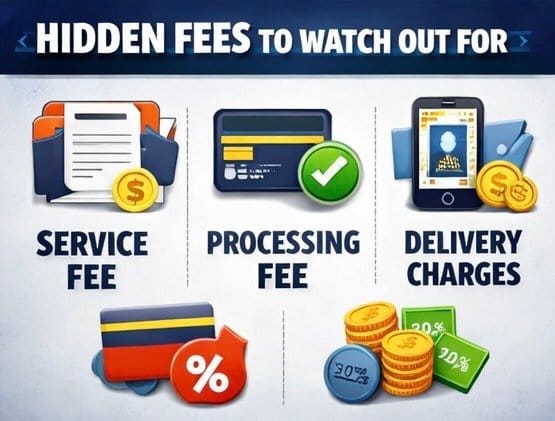
🧾 Hidden Fees Explained (So You Don’t Get Burned)
Many fans think they found a deal… until checkout. Here’s what to watch for.
Fee Type
What It Is
How to Reduce the Pain
Service Fee
Platform charge for facilitating the sale
✅ Use “all-in pricing” filters when available
Processing Fee
Payment handling / transaction costs
✅ Compare final totals across listings
Delivery / Mobile Transfer
Digital delivery costs or transfer handling
✅ Avoid listings with unusual delivery add-ons
Taxes
Local/state tax depending on venue
✅ You can’t remove this—just budget for it
🧠 Smart habit: Always compare tickets by final checkout price, not the “seat price.”
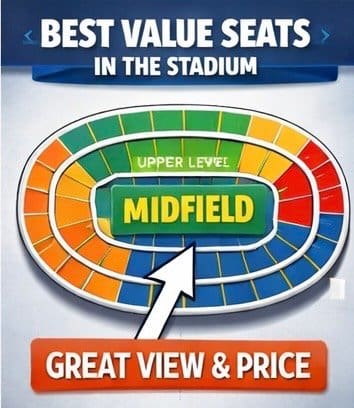
🪑 Seat Strategy: Where to Sit for the Best Value
Paying less doesn’t mean a bad experience. Value comes from choosing the right section for your goal.
Your Goal
Best Seat Type
Why It Works
📸 Best atmosphere
Lower bowl corners / end zones
Close to fans, energy, big-play view
🧠 Best “coach view”
Upper bowl midfield
You see formations, spacing, coverages
💸 Cheapest “get in” ticket
Upper corners
Usually the lowest price floor
👨👩👧 Better for families
Less rowdy side sections
Often calmer, easier restrooms/food access
🎯 Pro tip: “Midfield upper” is often the best value seat in the entire stadium.
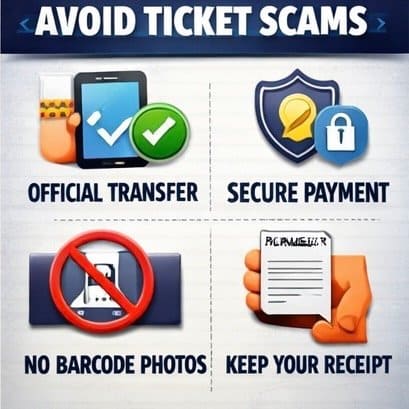
🛡️ How to Avoid Scams (Simple Safety Rules)
🔒 Only buy from platforms that provide official mobile transfer and buyer protection.
🚫 Avoid “DM me” deals and screenshots of barcodes.
📲 Prefer tickets that transfer directly to a mobile wallet/ticketing account.
🧾 Keep receipts and confirmation emails until you’re inside the stadium.
⛔ If a deal is “too good to be true,” it usually is.
✅ The No-Stress Buying Plan (Step-by-Step)
🧮 Choose your max “all-in” budget (final price).
📅 Pick 2–3 acceptable games (not just one).
🔍 Track prices for 3–5 days (unless premium rivalry).
🧾 Compare final totals at checkout—don’t trust sticker prices.
📲 Buy, save confirmation, and ensure mobile transfer is received.
❓ FAQ (SEO-Friendly)
Do NFL ticket prices drop closer to game day?
Sometimes—especially for normal matchups. But premium rivalries and high-stakes games can stay expensive. Use the timing table above to decide.
Is it safe to buy resale NFL tickets?
It can be safe if the platform uses official mobile transfer + buyer protection. Avoid screenshot barcodes and “message me” offers.
What’s the #1 mistake fans make?
Comparing seats by the listed price instead of the final checkout total. Fees can change the real cost.
Where is the best value seating in an NFL stadium?
For most fans, upper bowl near midfield offers the best “see the whole game” view at a lower price.
Should I buy tickets months ahead?
If it’s a premium rivalry or a bucket-list game, buying earlier reduces stress. For normal games, monitoring prices closer to kickoff can often help.