MLB TV Rights Shake-Up: 9 Teams End FanDuel Sports Network Deals — What It Means for 2026
⚾ MLB News • Media Rights • Streaming & TV
MLB TV Rights Shake-Up
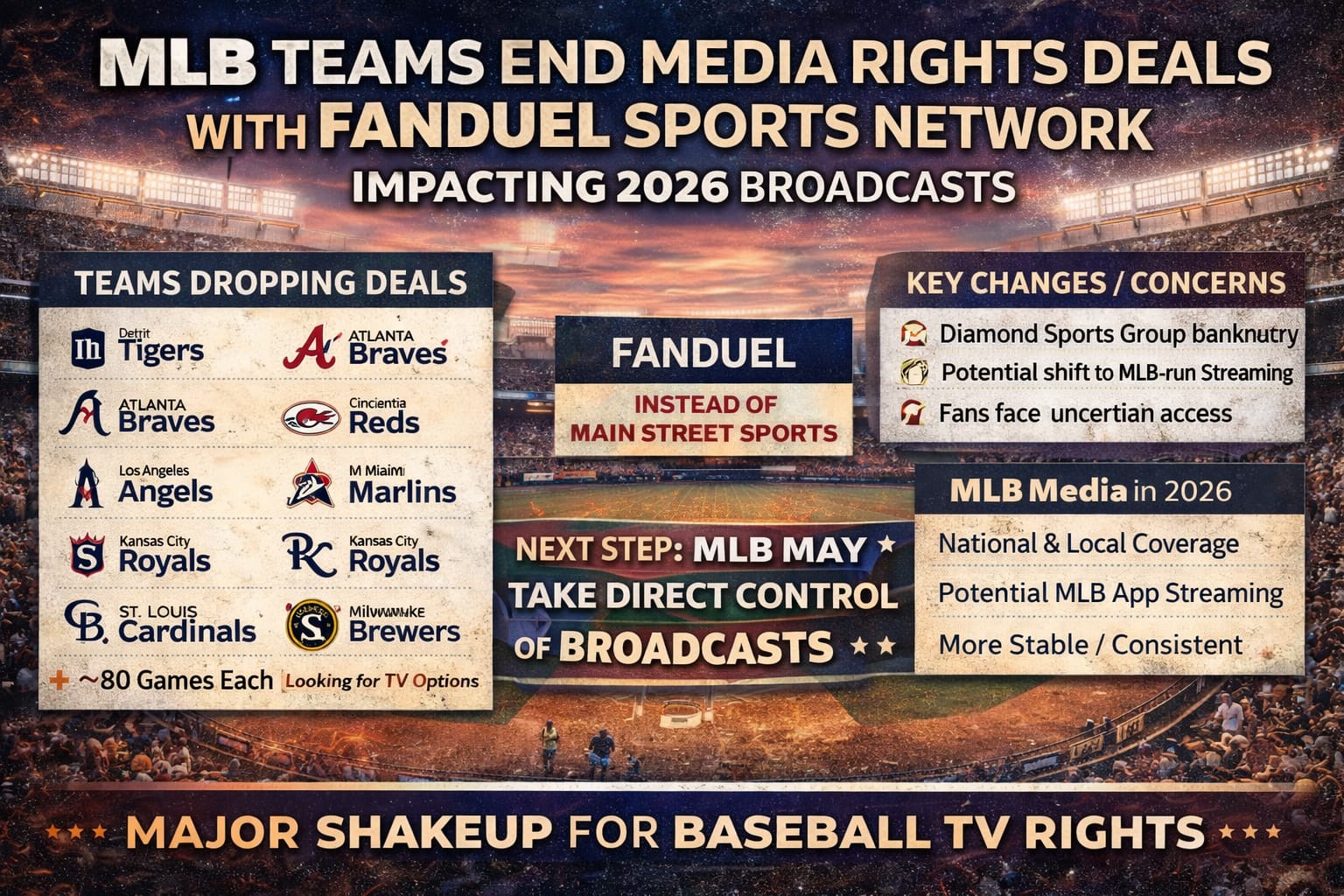
A major local-TV disruption is unfolding in Major League Baseball: nine MLB teams have ended their local broadcast agreements with FanDuel Sports Network (Main Street Sports Group). MLB says it’s prepared to produce and distribute broadcasts if needed — a shift that could reshape how fans watch games in 2026.
⚡ 60-Second Summary (Discover-Friendly)
- ✅ 9 MLB teams ended their FanDuel Sports Network deals.
- 📉 The trigger: reported payment issues tied to the local-rights operator.
- 🎥 MLB says it can step in to produce and distribute games if necessary.
- 📲 This could accelerate a move toward league-run local streaming in 2026.
📌 What Happened?
Multiple teams terminated local broadcast contracts with FanDuel Sports Network, which is operated by Main Street Sports Group (the company formerly known as Diamond Sports Group). MLB Commissioner Rob Manfred said MLB is prepared to produce and distribute broadcasts if needed, building on MLB’s recent experience stepping in for local rights in certain markets.
🏟️ Which Teams Are Affected?
| Affected Teams (Reported) | Why This Matters |
|---|---|
| St. Louis Cardinals | Payment issues were cited as a key trigger for action. |
| Atlanta Braves | High-demand market; broadcast clarity matters for fans and sponsors. |
| Cincinnati Reds | Local rights uncertainty can impact distribution and revenues. |
| Detroit Tigers | Example of clubs acting early to protect future media income. |
| Kansas City Royals | Local TV stability is critical in smaller-to-mid markets. |
| Los Angeles Angels | Large market: streaming access and blackout rules become key. |
| Miami Marlins | Distribution changes can affect reach and growth. |
| Milwaukee Brewers | Local rights are a major slice of team business planning. |
| Tampa Bay Rays | Fan access is sensitive in markets with heavy cord-cutting. |
Note: Team list and league response are based on reported coverage and official comments.
📊 Old Model vs New Direction (Quick Comparison)
| Topic | Traditional RSN Model | Potential MLB-Run Path |
|---|---|---|
| Distribution | Cable / satellite bundles + select apps | More centralized league distribution + streaming focus |
| Reliability | Dependent on RSN financial health | Potentially more stable if league-controlled |
| Fan Access | Often fragmented by market and provider | Could be simplified if rights are consolidated |
| Blackouts | Historically common in local markets | Could evolve depending on rights structure and agreements |
| Revenue Flow | Team payments tied to RSN contracts | Teams may seek stronger guarantees or new partners |
🔍 What Fans Should Watch Next
- Who produces the broadcasts? MLB has said it can handle production and distribution if necessary.
- Where will games be available? Expect announcements on cable partners, streaming options, and market rules.
- Will blackout rules change? Any shift here would be a massive search driver all season long.
- Will teams renegotiate? Some clubs may still pursue new deals for better revenue and reach.
❓ SEO FAQ (Built for Search + Discover)
Why did MLB teams end their FanDuel Sports Network deals?
Reports cite payment issues and uncertainty around the local-rights operator’s financial situation, pushing teams to protect revenue and ensure reliable broadcasts.
Which MLB teams are affected by the FanDuel Sports Network contract terminations?
Reported teams include the Cardinals, Braves, Reds, Tigers, Royals, Angels, Marlins, Brewers, and Rays.
Will MLB take over local broadcasts in 2026?
MLB has said it’s prepared to produce and distribute broadcasts if needed. Whether it takes over depends on how rights deals evolve.
Will this change how fans watch MLB games?
Potentially. Distribution could shift across cable providers, streaming packages, and league-run options depending on the final rights structure.
Will blackouts change?
Blackouts are tied to media-rights agreements. Any major restructure can change how blackout rules work, but specifics depend on future contracts.
Editor’s Tip: Update this post when official distribution details drop (streaming app availability, providers, blackout rules). That “freshness” boost helps both Search rankings and Discover recirculation.
0 Comments