

The NBA has undergone one of the most dramatic transformations in the history of professional sports. Over the last two decades, basketball has evolved into a faster, more strategic, and analytics-driven game. What once revolved around dominant post players and physical defense is now defined by three-point shooting, pace, spacing, and versatile athletes capable of playing multiple roles.
This evolution has not only changed how teams play but also how fans consume the game, how players train, and how franchises build championship contenders.

The Rise of the Three-Point Revolution
The most obvious change in modern NBA basketball is the emphasis on the three-point shot. Teams now attempt more threes per game than ever before, driven by advanced analytics that highlight the efficiency of perimeter shooting compared to long two-point attempts.
Franchises like the Golden State Warriors played a crucial role in this shift, proving that elite shooting combined with ball movement could dominate the league. Today, nearly every team structures its offense around spacing the floor and creating open three-point opportunities.

Faster Pace and Positionless Basketball
Alongside the three-point boom, the pace of the game has accelerated significantly. Modern NBA teams push the ball in transition, seek early scoring opportunities, and prioritize quick decision-making.
Positionless basketball has also become the norm. Players are no longer confined to traditional roles like point guard or center. Instead, versatility is king. Big men handle the ball, guards post up, and wings are expected to defend multiple positions.

The Impact of Advanced Analytics
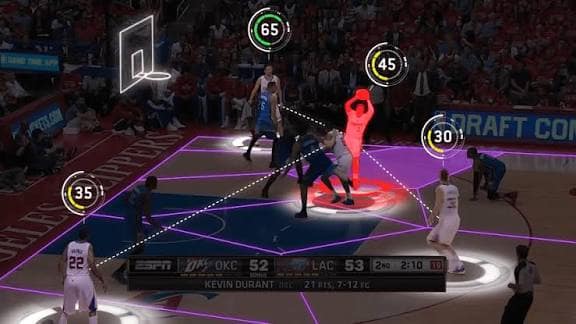
Analytics have reshaped every aspect of the NBA. Shot selection, defensive schemes, and player rotations are now heavily influenced by data. Coaches rely on metrics such as effective field goal percentage, usage rate, and defensive efficiency to optimize performance.
This analytical approach has led to smarter basketball, reducing inefficient shots and emphasizing teamwork, ball movement, and spacing.
The New Generation of NBA Superstars
The modern NBA has also ushered in a new generation of superstars. Players like Luka Dončić, Jayson Tatum, and other elite talents combine size, skill, and basketball IQ in ways rarely seen before.
These athletes thrive in the modern system, excelling as scorers, playmakers, and leaders. Their versatility allows teams to build flexible lineups capable of adapting to different opponents and playoff scenarios.

How This Evolution Shapes the Future of the NBA
As the league continues to evolve, innovation remains constant. Youth development focuses on shooting and skill rather than traditional positions. International influence continues to grow, bringing new styles and philosophies into the NBA.
The modern NBA is faster, smarter, and more entertaining than ever. For fans, this means more scoring, dramatic momentum swings, and unforgettable performances. For teams, success depends on adaptability, data-driven decision-making, and maximizing every possession.
The evolution of NBA basketball is far from over, but one thing is clear: the game will continue to push boundaries, redefine roles, and captivate audiences around the world.
0 Comments